
220L Drum Selection Guide: Materials, Sizes and Industrial Uses
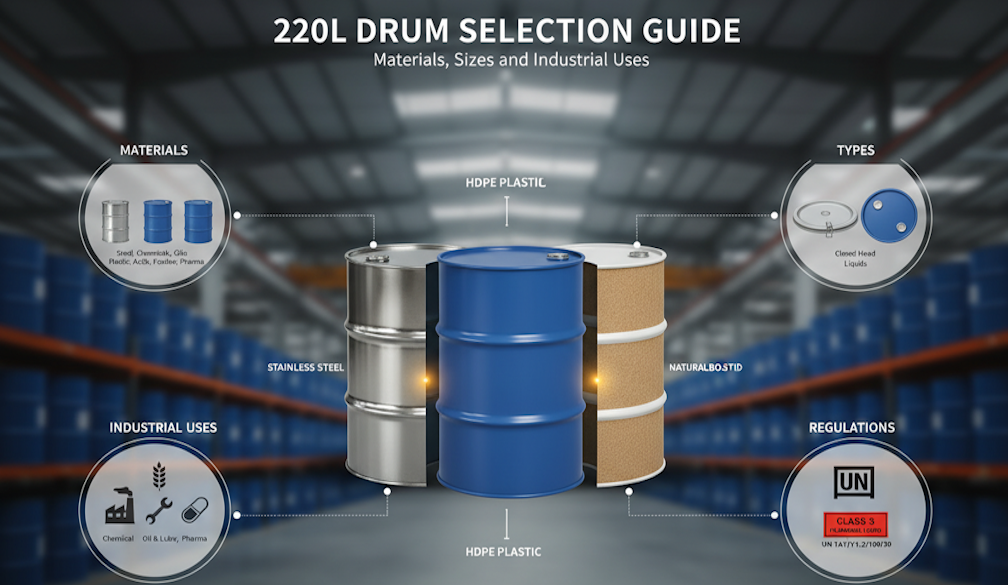
The 220L drum is a staple of industrial liquid storage across a wide range of sectors, valued for its capacity and the practical handling advantages that come with a standardised format. However, choosing the right drum for a given application involves more than simply picking the largest container available. Material compatibility, intended use and storage conditions all play a role in determining which product is actually fit for purpose. This article will detail the key considerations that should guide your selection when sourcing a 220L drum for industrial use.
Material Options and Why They Matter
The material a drum is made from has a direct bearing on what it can safely contain and how well it holds up over time. Plastic drums, typically made from high-density polyethylene, are widely used for chemical storage and food-grade liquids because the material is resistant to corrosion and doesn't react with a broad range of substances. Steel drums offer greater structural strength and are often preferred for flammable or high-temperature applications where plastic may not be appropriate. Understanding the chemical and physical properties of what you're storing is the starting point for any 220L drum selection, as getting this wrong can create safety risks as well as damage to the contents.
Open Top Versus Closed Head Drums
One of the more practical distinctions in drum selection is whether you need an open top or a closed head configuration. Open top drums allow for easier filling and access to the contents, which makes them well-suited to semi-solid materials, viscous substances or products that need to be scooped or ladled rather than poured. Closed head drums, which have a fixed top with one or two bung openings, are better suited to liquids that need to remain sealed during storage and transport. For many industrial applications, the 220L drum in closed head configuration is the standard choice, but it's worth confirming this against your specific filling and dispensing requirements before ordering in volume.
Industrial Uses Across Sectors
The 220L drum appears across a remarkably wide range of industries precisely because the format is so adaptable. In the chemical and manufacturing sector, it's commonly used for raw material storage and the transport of finished liquid products, while the agriculture industry relies on it for fertilisers, pesticides and water storage in field settings. Food and beverage producers can also use food-grade versions for oils, syrups and liquid ingredients at various stages of production.
Storage and Handling Considerations
Selecting the right 220L drum is only part of the equation. Drums should be stored on stable, level surfaces away from direct heat sources or conditions that could degrade the material over time. When stacking is required, it's important to confirm that the drum is rated for that purpose and that the stack height doesn't exceed safe limits for the material and contents.