
Slurry Hose Selection: How to Match Flexible Piping to the Process
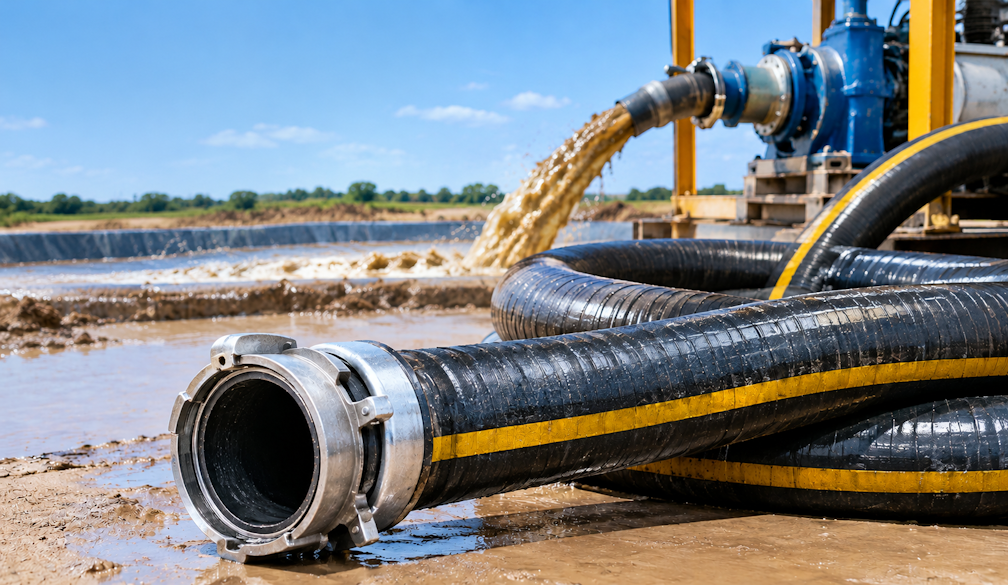
The type of slurry being transferred is a key consideration when selecting flexible piping. A slurry hose must balance wear resistance, flexibility and operating pressure. Particle size, concentration and abrasiveness can influence liner requirements and expected wear. Pacific Flow Technology manufactures slurry products with different liner compounds so the construction can be considered around the conveyed material.
Consider the Full Operating Duty
A hose used on a pump suction line has different requirements from one installed on a discharge-only section. A slurry hose must balance wear resistance, flexibility and operating pressure. Pressure, vacuum, temperature and movement should all be considered before a product is selected. Pacific Flow Technology offers mining hose constructions for both suction and discharge duties as well as flexible discharge applications.
Flexibility Can Reduce Installation Constraints
Rigid pipework may not accommodate every route or movement requirement in a processing plant. A slurry hose must balance wear resistance, flexibility and operating pressure. Flexible hose can help connect equipment while allowing bends and movement within defined limits. Pacific Flow Technology's range includes flexible mining hose, preformed bends and reducing hose designed for different installation conditions.
Wear Resistance Supports Service Life
Abrasive slurry can rapidly challenge an unsuitable liner. A slurry hose must balance wear resistance, flexibility and operating pressure. Pacific Flow Technology's Abrasatech compound is used as standard in its material handling hose range and is intended to provide abrasion resistance. Other liner choices are available for specific slurry types, allowing the hose construction to be matched more closely to the process.
Connection Design Affects Maintenance
The connection between a hose and the surrounding pipeline should suit the plant's installation and maintenance practices. A slurry hose must balance wear resistance, flexibility and operating pressure. Flanges, Victaulic spigots, muff couplings and plain or cuffed ends can all have different advantages. Pacific Flow Technology offers a range of end connection options and custom patterns for mining hose applications.
Custom Dimensions Can Solve Site Problems
A hose may need to meet a specific length, diameter or bend requirement to fit an existing installation. Pacific Flow Technology manufactures custom hoses and preformed products for situations where a standard straight hose is not suitable. Providing accurate application information can help the manufacturer develop a practical configuration.
A Structured Selection Process
Selecting a flexible slurry product should begin with the material conveyed and then consider pressure, vacuum, routing, wear, connection and maintenance requirements. Pacific Flow Technology provides technical advice and a range of hose constructions for demanding applications. A structured selection process can help ensure the finished hose is suited to the system rather than chosen on size alone.
The operating environment should also be considered when evaluating flexibility. A hose may need to bend during installation but should not be forced beyond its specified minimum bend radius during service. Poor alignment, over-flexing and excessive slurry velocity are among the conditions Pacific Flow Technology identifies as factors that can contribute to premature hose failure. Correct selection is therefore only one part of achieving reliable service; installation and operation need to remain consistent with the product specification. A practical review of routing, supports, movement and connection points before commissioning can help the hose perform as intended and make later inspection more straightforward.